Composers Finneas O’Connell (‘Beef’), Kris Bowers & Michael Dean Parsons (‘Spider-Noir’) and Joel P. West (‘Wonder Man’) on the joy and challenges of genre-bending scores
Composers Finneas O’Connell (‘Beef’), Kris Bowers & Michael Dean Parsons (‘Spider-Noir’) and Joel P. West (‘Wonder Man’) on the joy and challenges of genre-bending scores
By Christopher Rosen
Tuesday, June 2, 2026
SCORE KEEPERS From left: Charles Melton and Cailee Spaeny in Beef, Yahya Abdul Mateen II in Wonder Man, Nicolas Cage in Spider-Noir.
Ankler illustration. Netflix, Disney/Marvel, Amazon Prime Video.
I’m Christopher Rosen, deputy editor at The Ankler and co-host of the Prestige Junkie podcast. My special Art & Crafts series this week celebrates the talented artisans behind Emmy’s top contenders, including cinematographers.
With two Oscars and 11 Grammys, plus collaborations with Alfonso Cuarón, Pixar and, of course, his sister, Billie Eilish, Finneas O’Connell is at the point where he can set parameters on who he wants to work with. So when he was approached to write the music for season two of the Netflix anthology series Beef, it helped that O’Connell loved the first season — and yes, it certainly didn’t hurt that creator Lee Sung Jin was a huge fan of O’Connell’s albums with Eilish.
But ultimately, it was the vibe that sealed the deal.
“I would probably work with people who’d never made anything that I loved, but I loved hanging out with them, over working with somebody who had made something that I loved, but I didn’t like hanging out with them,” O’Connell says. “So Sunny (the nickname for Lee used by his friends and colleagues) was a perfect storm. I loved the first season, and then really liked hanging with him.”
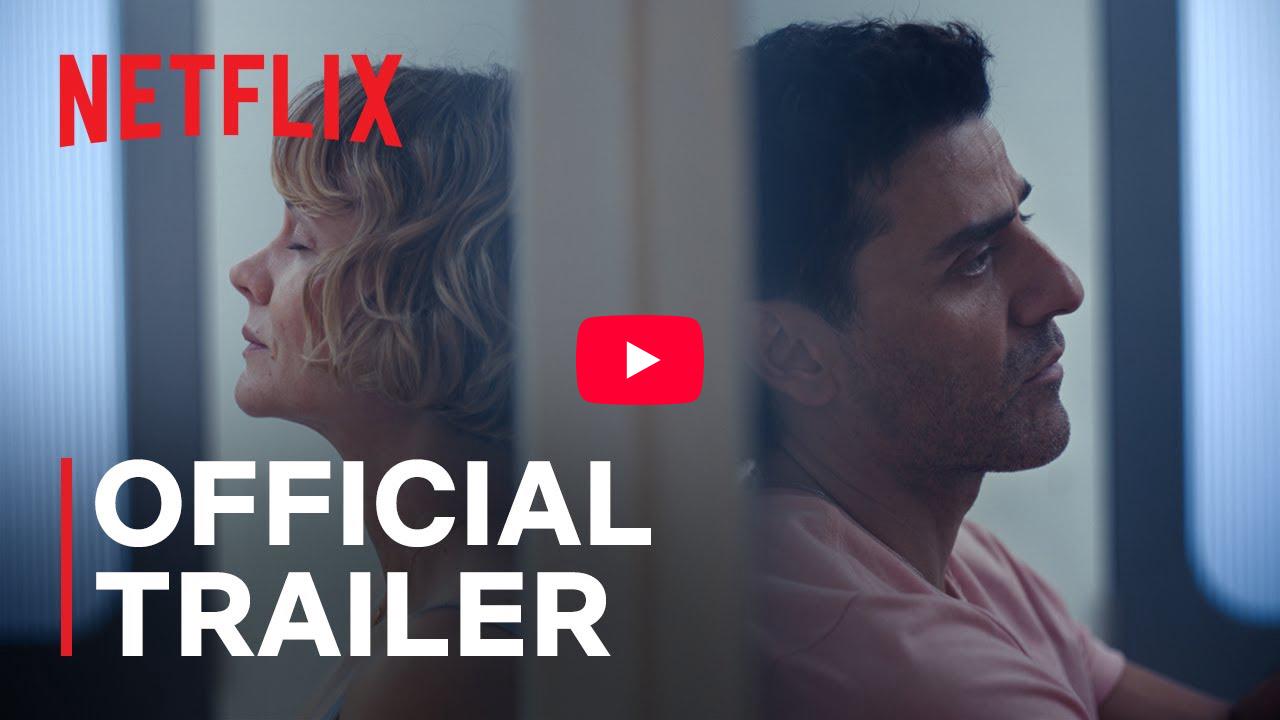
After winning multiple Emmys, including best limited series, for season one, Lee upped the stakes on Beef for season two — adding generational war between millennials and Gen Z to the class battles and cultural conflicts that he explored previously. The new season primarily focuses on two couples: Josh and Lindsay (Oscar Isaac and Carey Mulligan), the unhappily married millennials whose intense, violent argument sparks the show’s inevitable tragedy, and Austin and Ashley (Charles Melton and Cailee Spaeny), the Zoomers raised on Letterboxd and therapy-speak who are ill-equipped for the world they’re going to inherit.
As with season one, music was a key part of Lee’s vision — Josh is a fledgling musician and the soundtrack features several millennial classics, including tracks by Yeah Yeah Yeahs, Phoenix, Justin Timberlake and Hot Chip. In writing the score, O’Connell says he was cognizant not only of how his music would complement the needle drops but also of how the various character themes could sound generationally appropriate to the couples.
“When I was 13, I wanted to be one of Mumford & Sons. Austin and Ashley are maybe even a little younger than me in the show,” says O’Connell, 28. “So I thought they would have more sort of an ironic view of that kind of sound.” The theme he wrote for Austin and Ashley starts with a slow, strummy acoustic guitar before shifting into a more electronic beat. That shift “was trying to represent Ashley’s transformation through the season,” O’Connell adds, as Spaeny’s character reveals herself to be an unlikely operator.
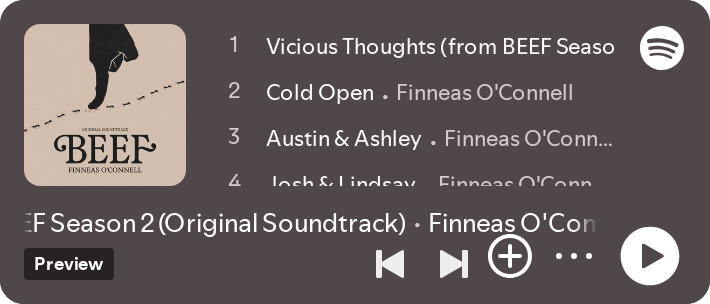
O’Connell wrote themes for all the characters, including Chairwoman Park (Youn Yuh-jung), the millionaire owner of the country club where Josh, Ashley and Austin work. (Her theme sounds like something John Carpenter might have written.) But the score’s standout piece is “Vicious Thoughts,” a broken love theme that carries through the entirety of the season, culminating in Josh and Lindsay’s final kiss after their relationship has fully shattered.
“The thing that I had in my in the back of my mind is that there’s this artifice in this show,” O’Connell says. In writing “Vicious Thoughts,” which opens with a droning, slow piano before exploding into a distorted melody, O’Connell tried to marry that conflict — the juxtaposition between the idyllic settings of the country club and the personal turmoil for the characters.
“I thought by the end of the journey of Josh and Lindsay, all of the lies that they’re telling themselves have been uncovered, and they’re truthful — and in their truth, they’re kind of powerless,” O’Connell says. “I just thought that this crazy, chaotic melody was an effective extension of what I hope those characters are going through.”
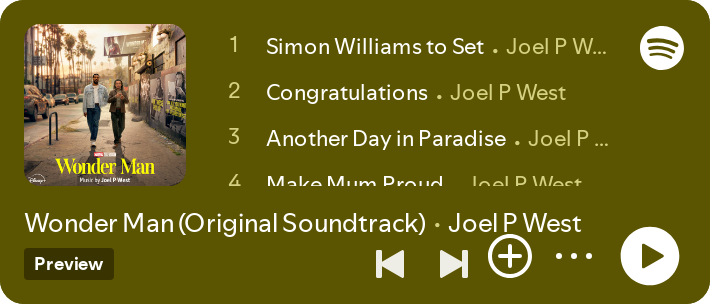
Ever since Destin Daniel Crettonstarted making movies, he’s had Joel P. West compose the music. West has written the score for every Cretton project since the director’s 2012 debut, I Am Not A Hipster, including Cretton’s breakthrough Short Term 12 and his Marvel film, Shang-Chi and the Legend of the Ten Rings. So when Cretton called West to talk about the music for the Marvel Television series Wonder Man, the musician was ready for the challenge.
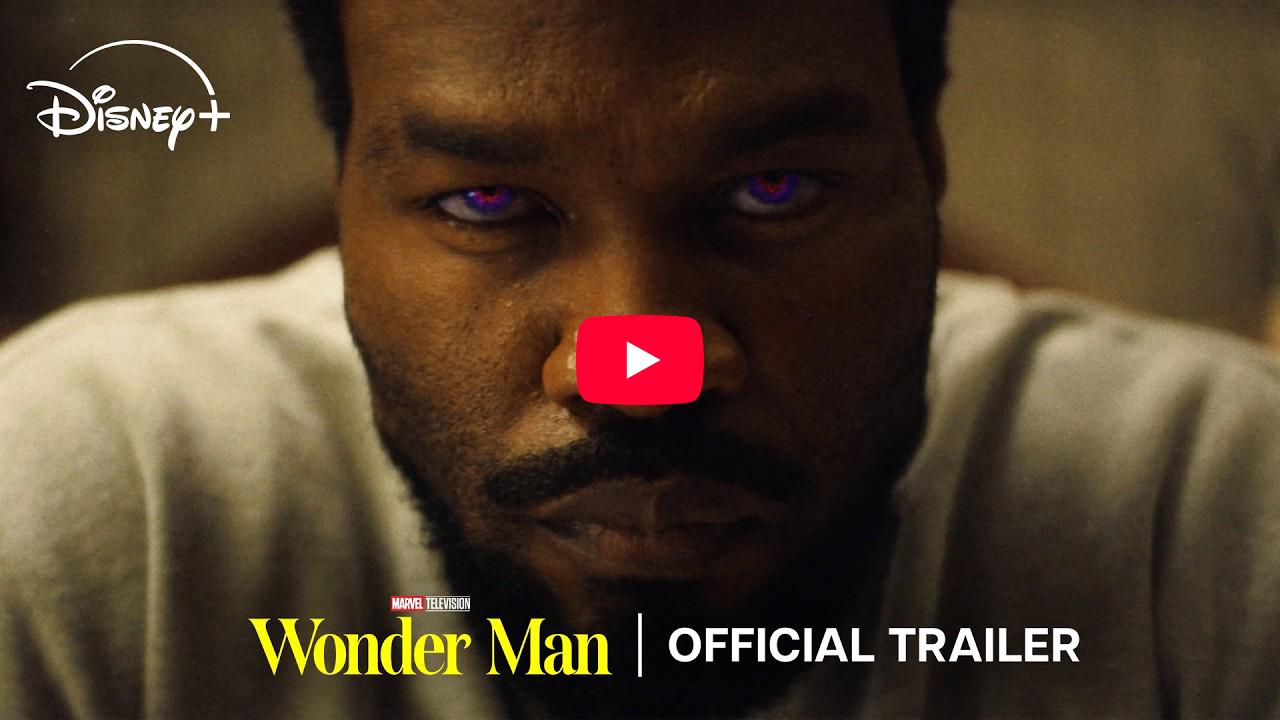
“No one had a clue what it should sound like,” West says. In those early stages, Cretton and co-creator Andrew Guest were still figuring out the tone of their Hollywood satire, about an actor with superpowers named Simon Williams (Yahya Abdul-Mateen II), who harbors dreams of playing the superhero Wonder Man on the big screen.
“Having that prior relationship with Destin allowed me to just really go on an open-ended journey,” West says. “Just having lots of history with him, I have no fear about sending in the scrappiest, weirdest piece of music. Other jobs, sometimes that’s a little spooky, because people can start to wonder if you were the right person to call.”
Wonder Man is a series that kind of defies generalization. It’s a superhero show, but also not really — Simon doesn’t save the world or face intergalactic villains during his quest to reach the silver screen, but instead fights with his own self-doubt. It’s a Hollywood satire, but one that wears its heart on its sleeve — replacing the cynicism of The Studio with an earnestness that feels more akin to how The Bear handles the restaurant business. For West, the challenge became balancing those idiosyncrasies, while also paying tribute to a general “old Hollywood” sound that exists in memory if not reality.
“Hollywood’s always kind of retelling stories about itself, and its memory is very blurry — it’s just such a funny little circus that’s happening to itself and within itself,” West says. He prepared for Wonder Man by listening to countless film scores, finding common instruments like timpani drums and harps — that sounded “goofy” but with an authenticity that couldn’t be faked.
“That ended up being the direction: leaning into extreme, but only if it felt really authentic,” West says. “It was really important to me that we didn’t go for a specific era. I think ultimately, that maybe gave us something that’s more just specific to our show, because it’s not really directly referencing anything. It’s just kind of like a weird stew pot of stuff.”
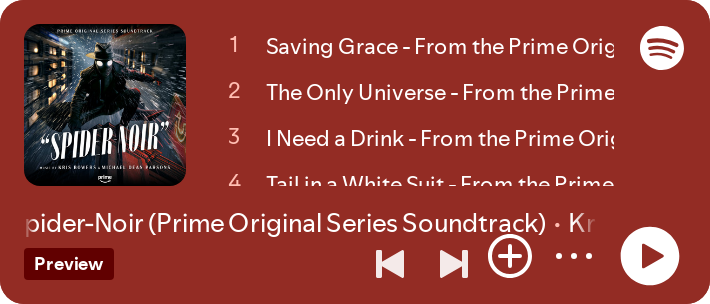
Speaking of weird stew, the brief for composers Kris Bowers and Michael Dean Parsons (Bridgerton) was similarly complex. For the Prime Video series Spider-Noir, which takes the familiar Spider-Man story and sets it in a 1930s film noir, Bowers and Parsons had to thread the needle between the two genres without resorting to pastiche.
“You see this kind of project, and you think, ‘Oh well, it’s going to be this blend of noir and superhero.’ But it ended up being this kind of third thing — where because the story is so singular and unique, we were never scoring it with this sense of homage,” Parsons says. “It was more like, ‘How do we support this story in the most earnest way possible?’”
Created by Oren Uziel and based on the Marvel comic series Spider-Noir, the show stars Nicolas Cage as Ben Reilly, a detective out of the Sam Spade school of gumshoes by day, and a superhero called The Spider by night. “It’s not your typical superhero series, in that there isn’t a ton of action in the first episode until the end of the episode, and a lot of the series is about Ben trying to keep himself from getting the mask back on, so to speak,” Bowers says. “Because of that, the score has to dive so much more into character study.”
Bowers and Parsons have worked together since 2019, and they were nominated together for an Emmy for writing the main theme for Bridgerton. “I was aware of Kris when I was in college in 2014 as one of two people who had actually managed to do this film thing after going to Juilliard,” says Parsons, who also attended the prestigious NYC performing arts conservatory.
“What’s always kind of amazed me about Michael, since we first met, is his being able to balance the Juilliard training with like big cinematic sound, and I feel like that’s pretty rare to have,” Bowers says. In addition to winning an Oscar as co-director of the short film The Last Repair Shop, Bowers has written music for films like Green Book and The Wild Robot. “There’s always been trust with us,” he says of Parsons, “where I know that if something’s not really as big as I want it to be, or if I’m hung up on something, I trust Michael’s sensibilities. That blended into the collaboration on this project.”
For Spider-Noir, the duo wrote themes for all the main characters, including Ben and the main villain, Silvermane (Brendan Gleeson). But what they steadfastly avoided was referencing or replicating sounds from noir classics like The Big Sleep or prior iterations of Spider-Man.
“It was definitely hard, but I think it’s essential — and for us, that was a big part of this process, is doing something that was really unique to this story,” Parsons says.
“I was thinking about this Orson Welles quote, where he talks about how he’s so frustrated with homage, because everything’s already an homage — like, why are you like intentionally trying to copy something when, like, everything you’re doing is based on what you know?” Bowers adds. “That’s kind of the same thing here.”
Still, early conversations between the collaborators included a deep study on noir — from Double Indemnity to Chinatown, covering the music of Max Steiner, Franz Waxman and Elmer Bernstein. “Then, we tried not to let the weight of that affect us,” Parson says. “It’s really accepting that the task is writing music for not one iconic genre, but two — and then trusting your training and gut.”