|
I’m back from the South of France, and Like & Subscribe is back to its regular schedule. Thanks to everyone who came to our panels at Cannes Lions and helped make reality TV, creator culture and the future of fandom feel like the week’s hottest conversations (I sat down with Real Housewives and Dancers With the Stars, Gen Z work husbands and top brand and entertainment execs). It’s so nice to hear IRL how many of you are enjoying this newsletter. Along with all the great conversations we at Ankler Media hosted and watched last week, we also joined ADWEEK for its Creative 100 Reception, which was co-hosted by Ankler Media CEO Janice Min and ADWEEK CEO Will Lee and attended by top execs including advertising legend David Bell (former CEO of Interpublic Group), Whalar co-CEO Jo Cronk, Whalar Group co-CEO Neil Waller, Superside CMO Jen Rapp, Higgsfield co-founder Mahi de Silva, Gold House CEO Bing Chen and Avail founder Chris Giliberti — not to mention the Teletubbies! The almost 30-year-old characters brought a touch of whimsy to the Croisette and to the soiree, sponsored by Higgsfield, Superside and Creator API by Avail. My colleague Hanna Hensler proved we’re all just kids at heart. 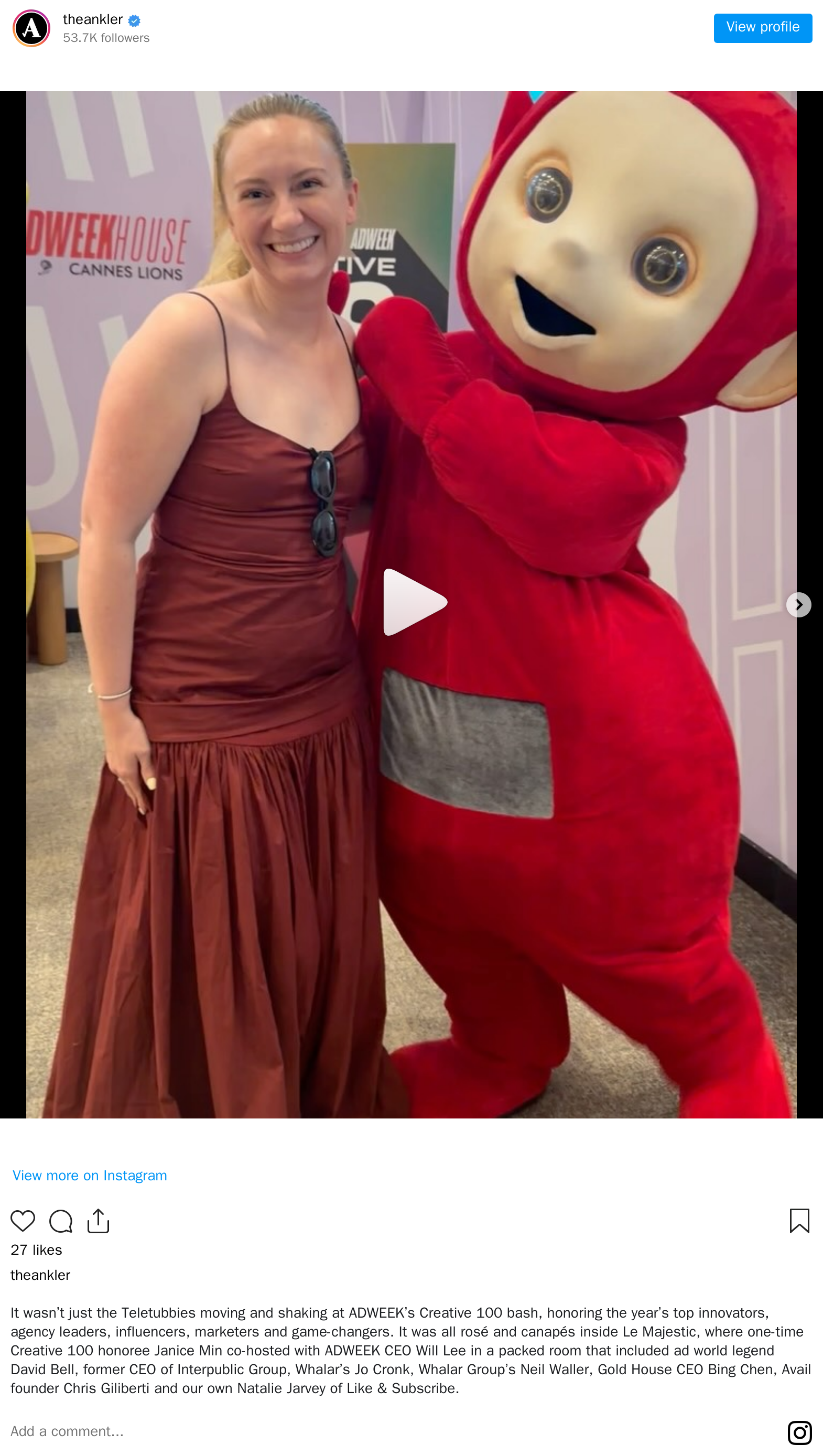
Speaking of dancing, there was a moment last Tuesday evening, as I sipped rosé on a rooftop in the 90-degree heat while Summer House star Kyle Cooke played “(I’ve Had) The Time of My Life” from the DJ booth, when it struck me: This just might be the summer of reality TV — the moment unscripted moved from guilty pleasure into full-blown cultural engine. Unscripted spectacle has always been popular, but lately it feels like it’s truly at the center of our culture and our business: ratings, brand deals and devoted communities that now behave more like sports fandoms than casual viewers. Stalwarts like Survivor and Dancing With The Stars have surged in the ratings as they capture new, younger audiences. Love Island USA has become so popular that NBCUniversal put an episode in theaters. And I’m betting that even if you didn’t watch Summer House, you’ve heard that Kyle is one of the main players in the relationship scandal that played out on the Bravo series earlier this year. Social media is a major driver behind Hollywood’s reality television boom. Instagram and TikTok have primed young audiences to check in multiple times a day on what are essentially mini reality shows starring their favorite creators, and fans now crave that same level of engagement from the casts of, say, The Traitors or Love Is Blind. The episode is only the beginning: The comments, DMs, TikTok, reunions and spinoffs are now part of the always-on machinery.
 |
| SOCIAL STARS From left: Dancing With the Stars pros Alan Bersten and Emma Slater and Real Housewives of New York’s Sai de Silva all shared with me how social media has helped them shape and amplify their TV brand. Collins House/Monica Martini |
Last week at Lions, I moderated a conversation — organized by the creator marketing platform Fohr — at the ultra-exclusive Collins House, where Dancing With The Stars pro Emma Slater explained that social media has become central to her strategy for going far in the annual competition series. After seeing social media-savvy contestants like Charli D’Amelio and Ilona Maher crush it in the audience vote, she started posting regular TikToks and Instagrams with her season 33 partner Reginald VelJohnson. All those videos really paid off last season when her partner, comedian Andy Richter, gathered his own fan army — they called themselves Fandys — and finished in seventh place. Reality TV now is also often seen as a stepping stone to a world of lucrative post-show brand deals and speaking engagements. Contestants on Love Island, for example, walk away from the show as in-demand influencers — a fact it was hard to forget last week as season seven breakout Olandria Carthen made the rounds at Lions, including appearing at multiple events with Microsoft, which struck a long-term partnership with her last year. As unscripted veteran and current FOX Entertainment CEO Rob Wade told Janice during their panel at The Impact Lounge in Cannes, these worlds are “going to meld into one big ecosystem. And I think really, the mindset that you have to have as an executive now is, you have to be willing to look for and find content everywhere — and ultimately distribute that everywhere.” Wade’s strategy was top of mind for me during my own conversation last week at The Impact Lounge with Frances Berwick, chairman of Bravo and Peacock unscripted, and Summer House and In The City star Lindsay Hubbard. Fresh off Summer House’s highest-rated season yet, we talked about what’s fueling reality TV’s monoculture moment and how the show has teed Hubbard up for off-camera opportunities. Plus, I couldn’t help but ask about how the secret relationship between Hubbard’s Summer House co-stars (Amanda Batula and West Wilson, who are both exiting the show, if you’ve somehow missed the drama) has impacted production and whether Hubbard will be back in the Hamptons when cameras start rolling over this Fourth of July weekend. Keep reading for an edited and condensed version of our conversation, where we got into:
- The “overwhelming” fan response to Summer House’s latest season, when Hubbard leans into the discourse and when she just has to “block, block, block”
- How Berwick and her teams cast for authenticity and vulnerability, particularly on Love Island
- How social media has supercharged Summer House and other shows — and the platform Hubbard is on “a little too much”
- What defines a Bravo show, and how Berwick and NBCU brass protect the iconic brand
- How Hubbard engages with Bravo fans
- What streaming on Peacock has done for top Bravo shows, including bringing in younger audiences
- Where reality TV goes next — and why Berwick is wary of derivative copycats
Don’t stop here
Unlock the full story — and the no-spin reporting Hollywood trusts
|