America turns 250 this week, and — like many people I know — I’ve been dreading it. The gaudy spectacle of a UFC fight on the White House lawn and the green-hued Reflecting Pool at the Lincoln Memorial have indeed felt like solid evidence that the country represented by this current administration is not all that worthy of celebration. But the best parts of America have never been the ones lionized by monuments or heralded by elected officials, and so, on that front, June has been an astonishingly good run for us. World Cup visitors have been greeted so cheerfully that it has been compared to a cross-country sleepover. The right team won the Stanley Cup. The New York Knicks got everyone rooting for Timothée Chalamet again. Pink turned out to be a great Tony Awards host, Widow’s Bay made character actors into stars and Olivia Rodrigo is bringing back Lilith Fair — what’s not to be excited about? Most importantly, for this newsletter’s purposes, the movies are back — big time. We’ve got expected hits in Toy Story 5 and Disclosure Day (however modest that one may be), youthquake phenomena Obsession and Backrooms and successes of all kinds of different sizes and for different audiences — from $677 million worth of millennial nostalgia in The Devil Wears Prada 2 to the World War II drama Pressure crossing an impressive $15 million in North America. As Ben Fritz pointed out in a recent Wall Street Journal story, this is Hollywood’s best box office year since the pandemic. He told me via email that the theater owners he spoke to for the story are confident the boom will continue thanks to pre-sales for titles like The Odyssey and Spider-Man: Brand New Day. That makes it a lot easier to stomach disappointments like The Mandalorian and Grogu and this weekend’s Supergirl, and maybe too easy for optimists like me to start thinking that this isn’t just a single good summer but a permanent shift. For the past six years, that’s been the kind of hope that gets your heart broken and might get you laughed out of the room. After years of downsizing and layoffs, the pandemic, strikes, shrinking theatrical windows, AI and streaming booms and busts, the default assumption in Hollywood has been Tony Soprano’s famous quote that we got in at the end of things and that the best is over. One-off successes like Barbie or Wicked didn’t feel like enough to stop what seemed like an inexorable generational shift toward staying home and staying on your phone, and, for some, opting out of Hollywood entirely. Obsession alone is proof that it doesn’t have to be that way — that kids can watch YouTube and show up to theaters, that you don’t have to put a movie on VOD two weeks after its release — but it’s also so much more than that. My pal Sean Fennessey, who wrote about this sudden burst of good vibes in his newsletter, Projections, pointed out that these theatrical hits are having downstream impacts on L.A. production, with (anecdotally, at least) more movies being greenlit and local post-production jobs actually available for once. Even the collective panic around AI seems to have subsided for the moment, with movies that no algorithm ever would have promoted, like The Drama and The Sheep Detectives, finding their audiences. My colleague Richard Rushfield, who is always eager to remind us of the doom waiting around the corner, acknowledges my theory is “not untrue” — but he sees it as more of a breather — with industry layoffs on hold and the Paramount-Warner Bros. merger still frozen — than a permanent return to the good old days. It might just be that we’ve stopped the bleeding, that the Peak TV era has finished shrinking (just look at the reduced number of Emmy submissions as evidence) and that the post-pandemic, post-strike production pipeline has leveled out. “There’s a feeling that the worst is over,” as Richard puts it. By his standards, that’s downright euphoric.
Battle WonForgive me for seeing everything through the lens of the Oscars, but I do think this might have all started back in March. One Battle After Another isn’t just one of the greatest best picture winners of all time but a movie explicitly about putting the power in the hands of the next generation to create a better future. In his first speech of the night, accepting the best adapted screenplay award, Paul Thomas Anderson said he made the movie for his children, “to say sorry for the housekeeping mess that we left in this world we’re handing off to them, but also with the encouragement that they will be the generation that hopefully brings some common sense and decency.” 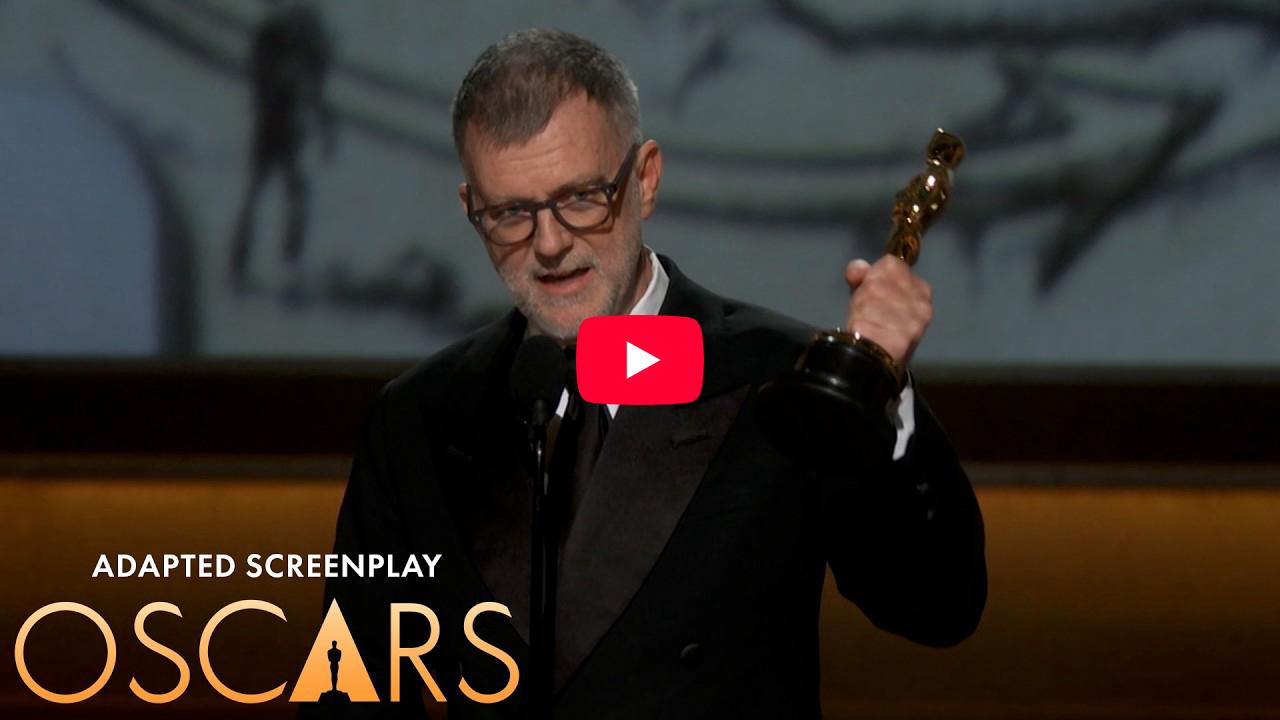
Less than a week later, Project Hail Mary became the year’s first true blockbuster, not just the story of a cross-species friendship between Ryan Gosling’s astronaut and the alien Rocky, but a fantasy about the world’s governments coming together to solve an apocalyptic problem before it was too late. As you’ll hear me argue on tomorrow’s episode of the podcast, that spirit of global cooperation and community feels a little less fantastical after weeks of unlikely World Cup friendships and cultural exchange; the World Cup will be a distant memory by the time Oscar campaigns properly ramp up in the fall, but I think that spirit will help buoy Project Hail Mary all the same. We’re not quite back to Obama-era hopecore and are probably better off for it. The elderly are still hoarding everything, the computers are still taking all the water and the grass on the White House lawn is still dead. Any surge of optimism right now is happening with full awareness of the many things that are bad and could get worse (I wouldn’t say I’m looking forward to seeing who ends up buying NBCUniversal). But the smart move might just be to find hope anyway. Anne Helen Petersen, who wrote about all these excellent World Cup vibes in her wonderful Culture Study newsletter, pointed out to me that both the World Cup and the box office enthusiasm are happening despite obvious flaws in the process — the ethical concerns at FIFA for soccer fans and the looming threat of mergers for Hollywood. The larger problems will still be there tomorrow, but it’s not wrong to seize happiness today. 
I’ve got my own reasons to lean into joy these days. This week also marks my 10-year anniversary of becoming a parent, having welcomed my first son at the end of a sweltering July 4 holiday weekend in 2016. The vibes were pretty good that summer, too, you might remember. Pokémon GO got everybody outside, Hamilton swept the Tonys and the absolute certainty that our first female president was on the horizon made things like the lady Ghostbusters drama feel like blips instead of warning signs. The world I’ve raised children in has been much more uncertain than I hoped for back then, but that’s probably true for most parents. Like Anderson, I’ve sometimes felt the need to apologize to my kids for the mess we’ve made of things. But being a parent also means getting daily evidence of a better future (on the good days, at least). I’ve taken my kids to the movies regularly for years now, sometimes feeling like I’m trying to hand them the secrets to a dying art so they can someday keep its memory alive. Lately, it’s what every other family we know is doing. Every theater we’ve been to this summer has been packed. A healthy box office isn’t enough to save Hollywood, just like a successful World Cup can’t fix America. But when my now-10-year-old and I are seeing The Odyssey together — we got our tickets a month in advance, snagging some of the last remaining seats at our local IMAX — it might just feel that way.
Up NextOne last programming note: After tomorrow’s podcast episode, this newsletter will go dark on Thursday to get a jump on the long weekend, and I’ll be back on Monday with both a newsletter and a new podcast episode with Christopher Rosen featuring our final Emmy nomination predictions. The nominations will be announced on Wednesday, July 8, by the dream team of Emmy winners Liza Colón-Zayas and Jeff Hiller, and Chris and I will be going live on YouTube to watch them with you at 8 a.m. PT. As you may remember from our Oscar nominations morning livestream, we get very excited about these things, so please come join in on the excitement.
 |
In the meantime, make sure to check out our Ankler Pundits page, where many of our smartest friends and colleagues have made their own final Emmy predictions and included some very fun wild cards. Is Katie Walsh right that Chase Infiniti can make it into the lead drama actress for The Testaments? Does the huge number of supporting nomination slots mean that as many as four actresses from The Pitt can be nominated? We don’t have to wait much longer to find out!
|