| |
|
|
FOLLOW US |
 |
 |
| |
|
 |
| Hasbro CEO Chris Cocks | Chaotic Works co-founders Karl Francis and Lawrence Grabowski |
This week, Knowledge speaks to Hasbro CEO Chris Cocks about the company's continued investment in videogames and its "timeless bet" on action-adventure titles. He tells us about what happened with Atomic Arcade and touches upon the inevitable AI debate.
In addition, Chaotic Works co-founders Karl Francis and Lawrence Grabowski outline their journey from Unity and Rebellion to building a UK indie and developing climate-centred shooter Project S.
After that, some picks from this week's social chatter, plus further reading and play recommendations.
- News: Xbox cancels Copilot AI, CCP rebrands as Fenris Creations, engine makers unveil AI features.
- Feature: Hasbro on growing its videogame reach, making tough calls, and globalising its teams.
- Interview: Chaotic Works' Lawrence Grabowski and Karl Francis on launching a UK studio, and why Far Cry 2 still matters.
- Social Commentary: Supercell's acquisition of Metacore, why narrative is difficult to quantify for investors, what's happening to triple-A's senior talent.
- Extra: Annapurna's Mixtape launches, Chris Tran puts his job board live, Blindfire: Lights Out goes free for all.
- This Month In Edge: Issue 423 showcases Frictional Games' Ontos.
|
|
|
 |
| Xbox CEO Asha Sharma |
- Xbox is reviewing its strategies following its recent leadership shake-up. The company announced (off the back of decreasing gaming revenue for Q3 FY26) that it's cancelling Copilot AI, the AI-driven "personal gaming sidekick" it was developing for Xbox. CEO Asha Sharma said the firm is set to "retire features that don't align with where [it's] headed." More leadership changes were also announced, bringing in Microsoft CoreAI execs into Xbox. CoreAI VP of product Jared Palmer is now VP of Xbox engineering, while CoreAI president of design Tim Allen becomes head of Xbox Design. Jonathan McKay is Xbox's new head of growth, similar to the role he had at CoreAI. All the moves are detailed in this Kotaku story, while IGN reports that, despite these changes, "Xbox's previous stance on AI remains unchanged."
- Eve Online developer CCP Games has regained its independence from Pearl Abyss in a transaction worth $120 million. Rebranded as Fenris Creations, it'll stay under the leadership of Hilmar Veigar Pétursson, with the announcement clarifying that its "studios, products, and ongoing development plans remain unchanged." Pearl Abyss had originally acquired the Icelandic developer in 2018 for $425 million. We'll have more from the company next week onwards as Patrick Garratt reports from Eve Fanfest.
- Unity, Roblox and GameMaker all announced AI products this week. First, Unity launched its AI suite in open beta for developers using Unity 6 and above. This includes an in-project assistant, generators for a variety of assets from sprites to textures, and more. Details here. Meanwhile, GameMaker has announced the integration of Claude Code in its workflow, as part of the launch of its new runtime. For head of GameMaker Russell Kay this is the continuation of the engine's ethos about "making game development as accessible as possible." Finally, Roblox unveiled supersampling tools to make photorealism more accessible to its developers. Called Roblox Reality, it'll launch in early access "later this year or early next," the firm said.
- Supercell is set to acquire Metacore, the developer of hit mobile game Merge Mansion. Announced as part of a restructuring plan, Metacore says it needs to "make changes to remain competitive and to give Merge Mansion the best possible chance to succeed going forward."
- Two new Canadian studios emerged this week, both from triple-A veterans. First, in Montréal, former Ubisoft creative director Clint Hocking announced Build Machine Games; the studio aims to make "emotionally-resonant, socially-relevant games," he said. Meanwhile, Gearbox Studio Québec founders Sébastien Caisse and Pierre-André Déry unveiled Ricochet, a studio they co-founded with creative directors Maxime Babin and Yanick Piché, also formerly of Gearbox Québec. "After years of building within large organisations, we wanted to create a studio that moves faster, stays focused, and takes creative risks," Déry said.
- Following the unionisation of Magic: The Gathering Arena developers last week, Wizards Of The Coast and parent company Hasbro have missed the deadline to voluntarily recognise the union. As noted by CWA, it received "no direct response from the company." The union added: "We are confident that we are going to win recognition of this union; it's only a question of time." You can read our interview with Hasbro CEO Chris Cocks below.
- Following the unfortunate demise of Reboot Develop, a new event has emerged on the Croatian scene. Splitscreen will debut April 20–22, 2027 and, as the name implies, take place in Split. Its website clarifies that it's "a new event created by a new team" but that some of its members were part of Reboot. "If you loved what Reboot felt like, you'll likely feel at home here too – this is our way of building the next chapter."
|
|
|
| "Good old-fashioned action-adventure games, a really cool story, 40–50 hours of content and a fair price": CEO Chris Cocks on Hasbro's "timeless bet" on videogames |
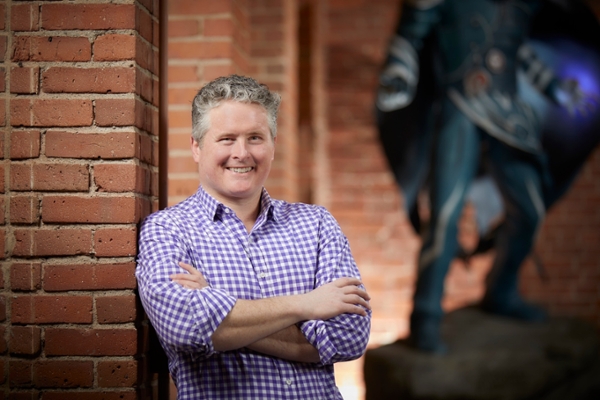 |
| Hasbro CEO Chris Cocks |
By Marie Dealessandri
It's been over a year since Hasbro unveiled its 'Playing to Win' strategy, doubling down on core brands, videogames and licensing.
And CEO Chris Cocks tells Knowledge the strategy has been paying off so far: "We reach about 1.1 billion people a year across markets, and that's been growing pretty significantly."
"When you think about [our] assets, we have these player communities established through offline games, Magic: The Gathering and Dungeons & Dragons, or our board games, Monopoly and Clue. That builds a large fanbase that you can then marshal in a variety of different capacities. Digital gives people another outlet to play a game that they love. And for people who don't necessarily play those games, it's a lower-friction entry point."
He gives the example of Magic: The Gathering and how free-to-play title MTG Arena gives newcomers an opportunity to learn how to play.
"We're trying to replicate that across our portfolio," Cocks explains.
Scrappy innovator
Despite Hasbro's manpower and 160 years of expertise in analogue play, Cocks still describes the company as a "scrappy innovator" when it comes to videogames. "We've been building out our videogaming capacity since 2018," he says, "but we really haven't shipped many games yet. We've been in investment mode and starting new studios."
The company has big expectations for the games it has scheduled for 2027: Archetype Entertainment's Exodus – which Cocks says is going to scratch players' Mass Effect itch – and Invoke Studios' Warlock ("a nice follow-up for all the millions of people who played Baldur's Gate 3").
On the other side of the coin, however, Hasbro closed Atomic Arcade – which was developing a GI Joe game – earlier this year.
"Atomic had some great people," Cocks says. "We tried to retain several of them and move them into other projects. It started small [in 2021] and then ramped into pre-production. We thought [the game] looked really good, but based on the hiring ramp we [had] and the metrics we [looked] at, we realised, 'OK, I don't know that we can hit this game at the budget and schedule we need'. We made a tough call, but we made the right call."
Rather than cancelling the project, though, Hasbro moved production to another team. No announcement has been made yet, but Cocks says it'll be a partnership rather than in-house development this time.
"That team was really good at building out the idea and getting it to a proof of concept. Now we found a different set of people who have a little more experience to take that idea and move it into production."
|
|
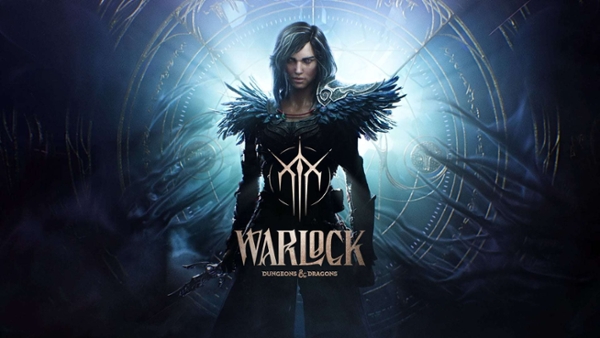 |
| Warlock (2027 TBC), Invoke Studios | Wizards Of The Coast |
Tough calls
Last year, we asked Wizards Of The Coast CEO John Hight whether it was more difficult to bet on new teams considering the industry context. He jokingly answered: "You should come back and ask me that question in a year." We ask Cocks for a follow-up and how that might have evolved over the past 12 months.
"It's always challenging," he says. "The cost of [making] games has gone up a lot since 2018. The market has grown, but it hasn't grown at the same pace as the cost of inflation for developing new games. That's the core challenge.
"I started at Wizards Of The Coast in 2016 – I bet it had sub-500 employees. Over the last decade, we've grown it to be north of 1,200 employees. In a time where the industry is having tough turns, we're doubling down and investing. That doesn't make us immune from having to make tough calls now and then. When we started our videogame journey, you had all these companies snapping up development studios, buying games and buying talent. We decided we weren't going to buy our way into the industry – we were going to build it up organically and start our own studios.
"When we seeded the initial teams, we were clear: 'Hey, we're going to invest in you, we're going to give you a long lead time.' But we made it clear that not all these games were going to work out. I'd say about a tenth of the games that we went into concept with made it into pre-production, and about half [of those] have made it into production. There's a little bit of churn associated with that, but that's inherent in any creative industry. We have been investing and, on the whole, we have been net hiring at a pretty significant rate."
The company is still aiming to release up to two videogames yearly for the next five to six years. And while it's not looking to open more in-house studios, Cocks says there is a focus in trying to globalise the developers it does have, and diversify where it's drawing talent from. It's particularly looking at Eastern Europe and Montreal, Canada.
"We probably have 150-ish people in Montreal today – I wouldn't be surprised if that grew to be 300-plus over the next couple years," he says. "Partnerships and joint ventures are pretty important for us as well. I could easily envision doing more games with people like Saber."
|
|
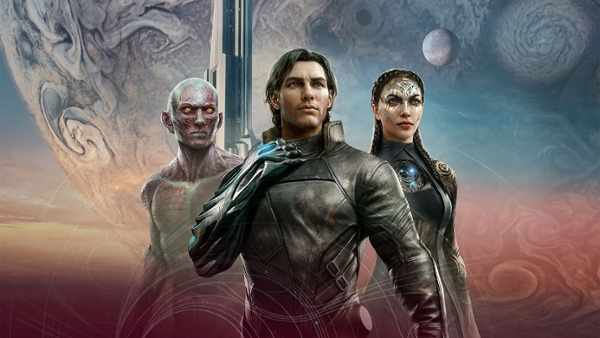 |
| Exodus (2027 TBC), Archetype Entertainment | Wizards Of The Coast |
Ready or not, AI comes
With the industry still undergoing a painful transformation, we ask Cocks for his thoughts on the current state of videogames, how he envisions its future, and where AI fits in.
"In a creative industry, you're going to have these gear shifts. A couple years ago, everyone was talking about games as a service… I think: balance in all things. Have a portfolio approach, maintain some ability to test and learn, try new things across different areas, and you'll be better off. That's what I hope the industry will end up doing.
"We're taking the approach that good old-fashioned action-adventure games that have an amazing protagonist, a really cool story, give you 40–50 hours of content and a fair price, is a timeless bet. That doesn't mean I'm anti-Roblox or anti-UGC. Those are really cool, too. Games as a service obviously has huge upside; that's what Monopoly Go is. As a company, we'll try to pick a lane that we can become great in and deliver really good product in, and then we'll use partnerships to fill out the balance.
"In terms of things like AI, I'm pretty pro-AI. I use it all the time in my personal life. I use it mostly for D&D – it really helps me with writing and image creation for my campaigns. I see it being adopted across Hasbro for productivity, selectively with different teams for design and innovation. It's got to be used responsibly. As we start to productise it, we have to make sure that we're paying creators and giving creators credit for what we're doing."
Cocks says Hasbro has an "AI studio" working on a number of unannounced products. "As we roll [them] out, whether that's a toy or a game, we have to make sure it's for the right audience and expectations are set the right way," he concludes.
(After our interview, Hasbro clarified in a statement that, when it comes to AI, it has different approaches for different brands: "There are some brands that the audience, the creators, just don't want it, so we don't even have it in our pipelines for our videogames or for Magic: The Gathering, or D&D. As AI unlocks new possibilities for interactive storytelling and creativity, it remains a tool in service of those fans: powering human-centred experiences that protect, inspire, and empower.")
|
|
|
| Taming tornadoes: How Chaotic Works built a UK game studio on trust, transparency and terrible weather |
By Patrick Garratt
Lawrence Grabowski and Karl Francis left senior roles at Rebellion and Unity to found an independent studio with nothing but savings. Three years on, they have around 30 staff, a physics-driven sandbox in closed testing, and a funding route worth studying given the game industry's current climate of employment woes.
Getting off the floor
In early 2023, Francis worked at Unity and Grabowski at Rebellion. Both had spent a decade watching the industry from inside large operations, mulling over the formation of an independent studio. What they lacked were means. The year previously, they'd flown to Iceland at the invitation of the Eve Online alumni network, meeting VCs and angel investors in Reykjavik. The trip was designed, at least partly, to put them off.
"They asked us lots of challenging questions," says Grabowski. "'Are you insane? Are you sure you're ready for this? You're going to have to throw in everything – your savings, your financial security, perhaps your sanity.' I think they tried to put us off, which is probably quite a sensible thing to do. But they didn't. We came home from that and said, 'OK, we're going to do it.'"
Both founders quit their jobs in 2023 with enough money to get them to the end of the year: "The cash was going to run out in December," says Grabowski.
Their route to early capital was through SEIS and EIS – the UK government's Seed Enterprise Investment Scheme and Enterprise Investment Scheme – which offer significant tax relief to early investors.
"In some cases the capital risk would only be about 30 per cent: if the company fails, they'll get quite a lot of their original investment back," says Francis. "It's a lot lower risk, because the UK environment is quite hard. It's different from America in terms of people's risk-taking approach."
"No one wants to be the first one to put money in something high risk. It's generating that hype and that FOMO. Once you get past that first hundred thousand, it starts to move."
Their strategy for generating that momentum was relentless, structured communication. From September 2023 onwards, they produced monthly shareholder updates and sent them to people who were not yet shareholders – potential investors and interested parties.
"We'd say, 'Look, tell me to fuck off if you want, but I'll keep you updated,'" says Grabowski.
"Most people, after a number of months, would eventually say, 'Actually, I'm quite impressed.'"
Friends and family money followed angels, and then a UK government grant came through in 2024, the money arriving earlier this year. The studio has since grown to approximately 30 people, half of them employees in the UK, half international contractors.
With Project S, its mysterious first game, now in testing, Chaotic Works is in business.
|
|
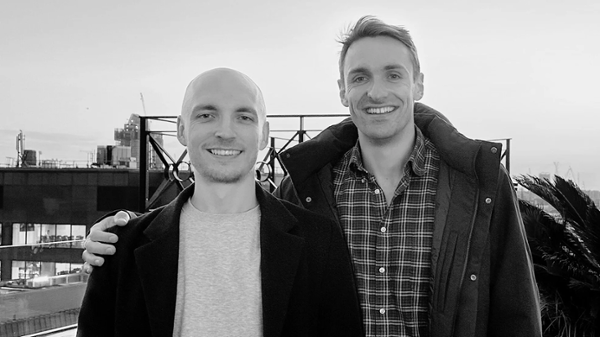 |
| Chaotic Works co-founders Karl Francis and Lawrence Grabowski |
Treating people decently
Chaotic Works has not hired a single person from an application. Every member of the team was identified and approached by the founders directly, with several key staffers joining based on assets they'd made for the Unreal Engine Marketplace.
Community and social manager Amy Brakespear joined more recently after a period as an adviser, brought on fully when the studio's government funding arrived this year.
"People that genuinely care about you, that openness and willingness to show you everything within the business – that's just unheard of in the world," she tells Knowledge. "To be picked is just, well, I'll probably never have that again in my life. And then that channels through your work and you always want to put in high effort."
The transparency Brakespear describes extends to runway, funding status, and share-option structures – which the founders document and explain in detail to everyone on the team, including contractors. Francis frames this as baseline courtesy.
"What surprised me is that a lot of this is just the very basics of treating people decently," he says.
Project S: physics, weather, and why Far Cry 2 still matters
Project S remains officially unannounced, and both founders are careful about detail. What they will confirm: it's a sandbox game, not an extraction shooter.
"Look at Minecraft or Day-Z or Rust – that kind of server duration," says Grabowski.
Players build mobile bases inside physics-simulated vehicles and try to survive and achieve goals in science fiction centred on hostile weather. More clarity is promised later this year.
Design references are Crysis, Far Cry 2, Fuel, Battlefield 3 – all from the 2007–2012 period when physics simulation and systemic environmental design were "the thing" in triple-A. The Ubisoft shooter, especially, has marked Project S.
"Far Cry 2," says a misty-eyed Francis. "The environmental response. A grenade over there, and then the tree sets on fire, the house sets on fire, the ammo box sets on fire, and it's all reacting in a different way than you expected. You feel the game behaving the way the world should. That's cool. And I think games have kind of lost that. They've been quite safe because those systemic things are a bit more hardcore than an ultra-casual experience. If you look at later Far Cry games, they just don't have that magic and grittiness of the second one."
Chaotic Works is heading back to physical unpredictability via speculative climate fiction and physics-based weather simulation. The narrative layer centres on corporate dystopia (think Alien) and weather control.
"It's a bit Weyland-Yutani," says Grabowski. "There's a giga-company equivalent to Apple, Google and SpaceX combined that basically controls global weather. It's going to shit. You're caught in the middle of it. They're telling you, 'Hey, employee, go fix it.' And you're like, 'What the fuck?'"
The studio has launched an ARG teaser site to begin building lore, and is deliberately avoiding the creation of expensive trailers as a form of marketing.
"You can spend a substantial amount of money on cinematics," says Francis.
"Making an actual game that people really care about, that's the really, really hard bit. And all our attention as a studio should be focused on that. People care about the gameplay the most."
|
|
|
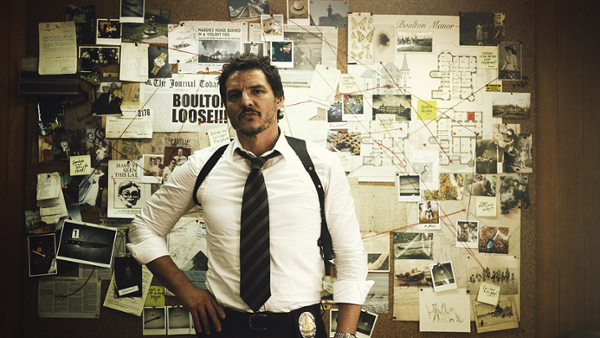 |
| Pedro Pascal in a 2023 promotional campaign for Metacore's Merge Mansion |
- "Supercell wins. It gets a much-needed revenue-generating title operated by a strong core team. Great addition to their portfolio, which is down 30 per cent from last year's heights."
- Fractional CPO Michail Katkoff weighs up Supercell's acquisition of Metacore, noting the latter's inability to remain at the top of the merge-two genre it popularised with Merge Mansion: "The company lost around $100m over its tenure. The last two years, the company was turning a profit, but the growth had stopped. Despite the head start, the company lost to brutally pragmatic teams with better live operations and stronger tools."
- "Narrative can be a tricky proposition in a climate where every decision that affects the bottom line gets scrutinized."
- Ex-Blizzard writer Steve Danuser explains that story in game development can be difficult to quantify in a business plan, even though it's essential to retaining audiences: "Narrative is an investment that builds long-term affinity for games and franchises. Whether or not a player identifies as a story fan, they intrinsically appreciate a game world that feels evocative and lived-in."
- "Senior talent is not leaving AAA. It is leaving old structures."
- Swame Art founder Anna Siaredzich notes the trend of senior game developers normally embedded at large companies shifting to different studio models in the wake of extensive layoffs: "If internal studio structures are shrinking, where does senior production expertise go? For many, the answer is external development. Not outsourcing in the old sense of cheap overflow labor. But embedded, senior-led production partnerships."
|
|
|
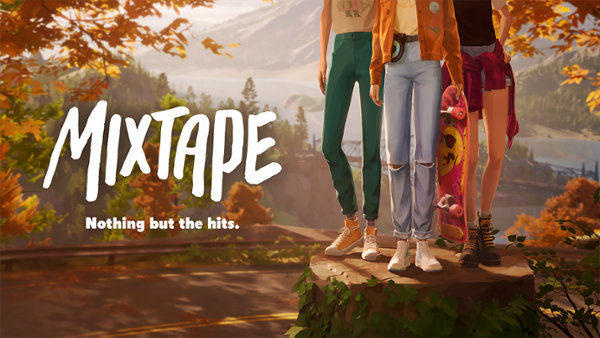 |
| Mixtape (2026), Beethoven & Dinosaur | Annapurna Interactive |
- Annapurna's Mixtape is now available for PS5, Xbox, Switch 2 and PC. Developed by Beethoven & Dinosaur, the game follows three school friends on their last big night out, with Proustian memory reenactment triggered by music. Heady stuff. Look out for our interview with creative director Johnny Galvatron next week.
- Looking for work? Ex-Riot SEA esports head Chris Tran has launched his Gaming Industry Job Tracker, a free, constantly updated board featuring more than 8,000 jobs.
- "How I raised $300k and launched an indie game publisher on Steam" is a post about how Polden Publishing co-founder and former Wargaming marketing executive Kirill Oreshkin built credibility by blogging and developing a Steam A/B testing tool which attracted both developers and investors. That led to a $300k equity investment which allowed him to focus full-time on publishing.
- Finally, as artist Ste Pickford notes, Double Eleven FPS Blindfire: Lights Out will no longer be updated and is now free to play. The game released in 2024 but has failed to attract a big enough audience to maintain development. Servers will be kept online "indefinitely" because, according to the publisher, "we believe games are art and they deserve to be preserved."
|
|
|
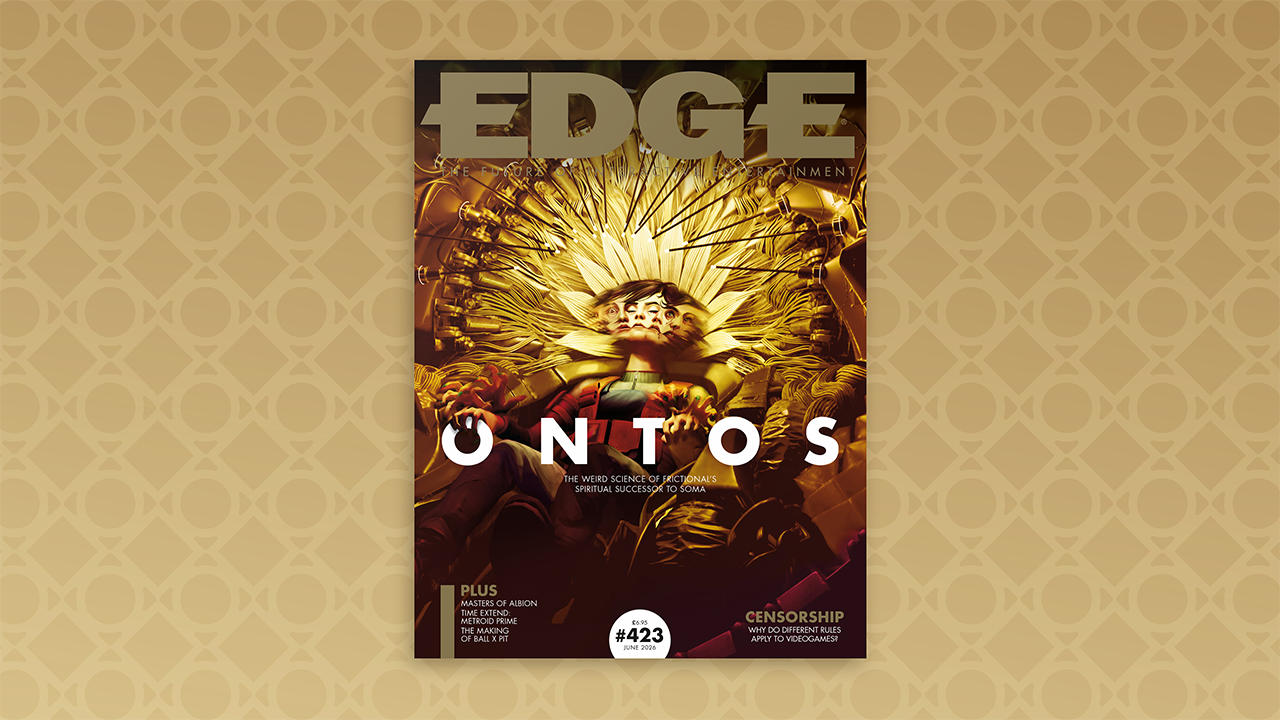 |
| Edge 423 |
Issue 423 of Edge is out now, showcasing Frictional Games' chillingly experimental Ontos. Step one: Read some excerpts below. Step two: Buy the magazine in a newsagent or online here. Optional third step: Start a subscription by getting your first three issues for £/$5.
"From a general design standpoint, the game is not really about trying to survive. It's not really, 'How do I avoid dying?' It's more about other people dying because of your actions."
Creative director Thomas Grip on one of the many ways Ontos upends expectations.
"As strong as engines like Unreal and Unity are, it's also not easy to create a complicated RPG with them, out of the box, without having to deeply modify the engines in question in the first place."
Technical director Bert van Semmertier tells us why Larian is part of a band of studios sticking with custom game engines.
"You can't really succeed on Kickstarter very much any more – at least in the game space, in my opinion – with a hope and a dream and a good idea. You have to have already done a shitload of work. That's the kind of philosophy you want to have in early access now."
Tyler Sigman, co-founder of Red Hook Studios, on the evolution of early-access game production.
"With this group of people, I barely have any meetings. I think we've had, like, three meetings total. Ever. Just to align ourselves on different things."
Designer Kenny Sun explains the unorthodox team-management approach behind Ball X Pit.
"Whatever you see to be the attitude of the game or not, if you feel really icky and wrong, if you feel really negative emotions from doing these actions, then that’s a unique thing games can do."
The University Of Salford's Dr Anthony Smith joins us to pick through the tangle that is game censorship.
"Remember when you were a kid and you could turn any walk into a game, just by deciding to hop every third pavement stone, or pretending you could explode pigeons in the street by thinking hard enough at them?"
Alex Spencer takes the world of game design onto the streets.
|
|
|
| Looking for even more gaming knowledge? Take a look at the range of weekly newsletters available from our friends at GamesRadar+ |
|
|
|
|
|
|
|
| © Future Publishing Limited. Reg No. 2008885 England. |
| Quay House, The Ambury, Bath BA1 1UA. |
|
|
|