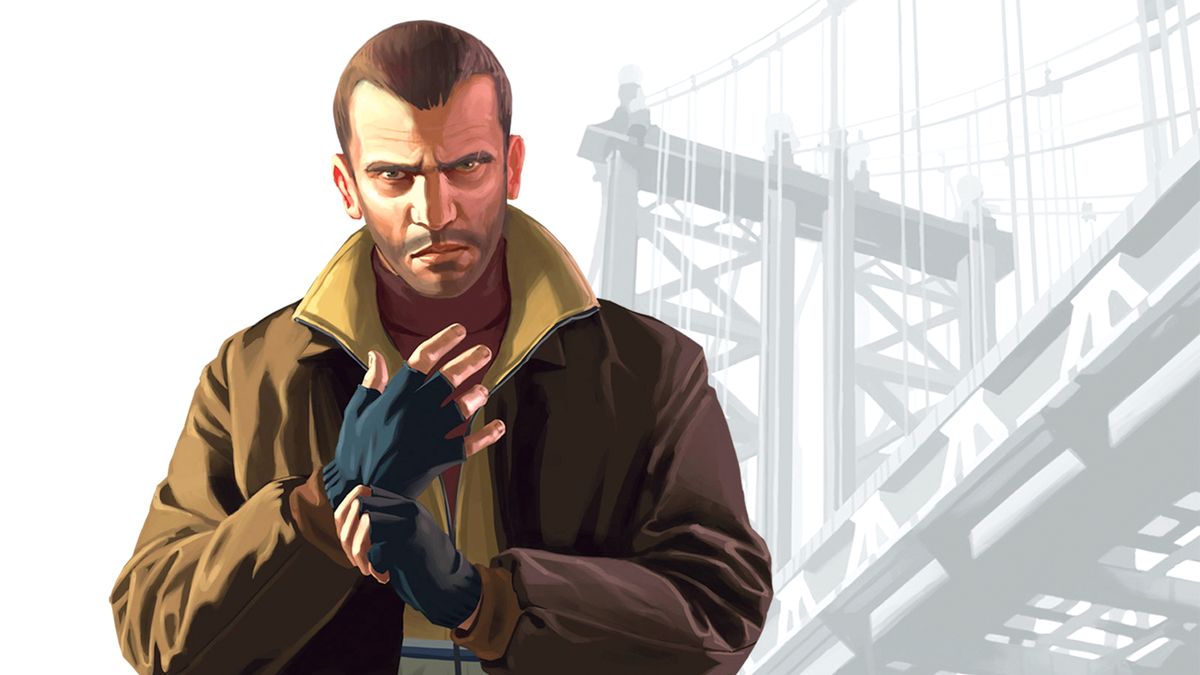
Grand Theft Auto IV, released on April 29 2008, officially became an adult this week - but why does Rockstar’s gritty, divisive, depiction of Liberty City still rank as, arguably, the best in the series?
In critical terms, it’s incontrovertible. GTA IV has a
Metacritic score of 98, ranking it above any other Rockstar game, including GTA V (97), GTA San Andreas (95) and Red Dead Redemption 2 (97).
18 years on, I thought it’d be fun to revisit critical (re)appraisals of GTA IV from a variety of writers and video essayists over the years, to see why it has such an enduring appeal - despite being almost oppressive in tone, defined by its stark adult choices.
1. Blockbuster Games Were Rarely This Bleak - Or Human
GTA games were famously feel-good power fantasies, until GTA IV gripped the handbrake with an uncomfortable, human story about survival, moral compromise, and messy reality.
Let’s not oversell this - GTA IV had its share of OTT violence and open-world fun - but it was a defining moment to play a huge budget GTA game that felt more like an episode of
The Wire, than an episode of
1980s Miami Vice.
What the Critics Say:
“<GTA IV>… is a high-budget game produced by one of the most successful developers that goes all-in on creating an experience about wandering, sympathetic souls doing awful things and making tough choices to survive a dingy, despairing world… GTA IV's ambitions… are still unmatched by nearly any other game out there. Epic in scope and bleak but humanistic, IV lives beyond these issues as a modern classic.”
2. A Mirror of Capitalism and the American Dream
GTA IV doesn’t glamorise crime, but uses it as a lens to critique capitalism, consumerism, and the illusion of the American Dream - forcing players to feel the same pressures as protagonist Niko Bellic.
What the Critics Say:
“The world is designed as a playground, but it’s also a mirror, reflecting back not only the worst parts of yourself, but society at large… The game communicates to the player what the world communicates to the player. That’s why Grand Theft Auto is one of the most important, successful, permanent touchstones of modern culture: Through an original American story, it takes the player through the same pressures and temptations as the protagonist. We feel the same allure of materialism and the same rush… We feel the same anger at the system that keeps us down.”
3. Tackling Controversy By Placing Games Alongside the HBO Era of TV and Film
It’s easy to forget quite how controversial GTA IV was, certainly in conservative countries (in fact, the game was banned in Thailand), with New York City Mayor Michael Bloomberg saying he “does not support any game where you earn points for killing police officers”.
Rockstar addressed a lot of this debate head on, by framing GTA IV alongside cinema and literature, capable of mature storytelling.
What the Critics Say:
“There is nothing in the game you would not see in a TV show or movie a hundred times over, so I don’t understand what the conversation is about. We set out to make games that felt like they could culturally exist alongside the movies we were watching and the books we were reading.”
Dan Houser, GTA IV’s head writer, speaking to Vulture in 2008:
“We believe the mature audience for Grand Theft Auto IV is more than sophisticated enough to understand the game’s content. For the same reason you can’t judge an entire film or television program by a single scene, you can’t judge Grand Theft Auto IV by a small aspect of the game.”
Rockstar statement to the Associated Press
4. GTA IV Centers Player Choice as Moral Temptation, Not Power Fantasy
GTA San Andreas ends with protagonist CJ
flying a jetpack into Grove Street, but years later in GTA IV, player character Niko Bellic is entering a ghetto apartment, deciding whether to kill his impoverished friend (in the infamous
The Holland Play mission, where Niko must choose between Dwayne and Playboy X).
GTA IV reframes player freedom as moral tension. Crime isn’t a guaranteed reward, but a temptation the player must wrestle with, coming to terms with uncertain outcomes.
What the Critics Say:
“There’s no reward for illegality; just punishment. Really, the only reason to do something criminal in Grand Theft Auto IV is for the sheer entertainment of it. The game always gives you a choice between the right way and the easy way… The dynamic of Grand Theft Auto isn’t forced violence, or even coercion. It’s temptation, and the player faces down that temptation at every literal and figurative intersection of the game’s story.”
Relevant Magazine
5. A Living City That Set a New Industry Standard
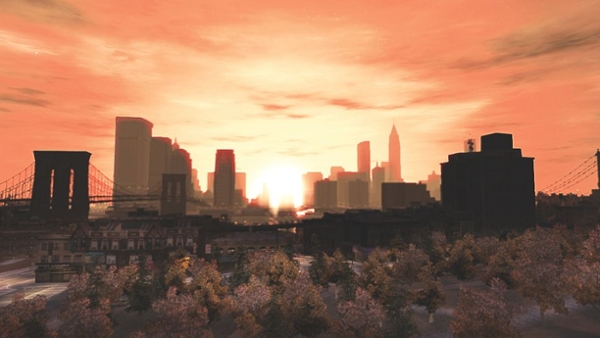
This was a depiction of New York you could feel: noisy, chaotic, vertical… oppressively grey and bewildering with its matrices of interlocked streets. You felt like an outsider in an overwhelming metropolis, where the world teemed with life, reinforcing your status as an immigrant forging his own path in a new world.
Dan Houser admits that GTA IV’s bleak tone was linked to his own complex feelings about living in New York, and his difficult personal life at this time.
"My life felt in a lot of flux," Houser told the Lex Fridman podcast. "As a company, we had all that Hot Coffee drama, so we constantly thought we may be shut down in the middle of making [GTA 4]."
"The process was trying to find an underbelly to New York and capture an immigrant experience, though I'm not entirely sure how accurate that immigrant experience was in 2008," Houser says,
as reported in PC Gamer. "I spent probably about a year travelling around with cops or meeting people, wandering around New York."
What the Critics Say:
“Liberty City is, to this day, the most immersive game-world that has ever been developed. For its time, it was light years ahead of any of its competition… The towering skyline, grandiose avenues, and unique neighborhoods that I had grown up watching in films and television shows were suddenly my own to explore and discover… its character and the stories told through its environment mean that it always feels alive and lived in.”